

Our Southold, East Setauket & Riverhead, NY Podiatrist Can Help With Your Bunion & Hammertoe Pain
BUNION
Are you tired of living with that painful bunion?
Are you having difficulty wearing your favorite shoes?
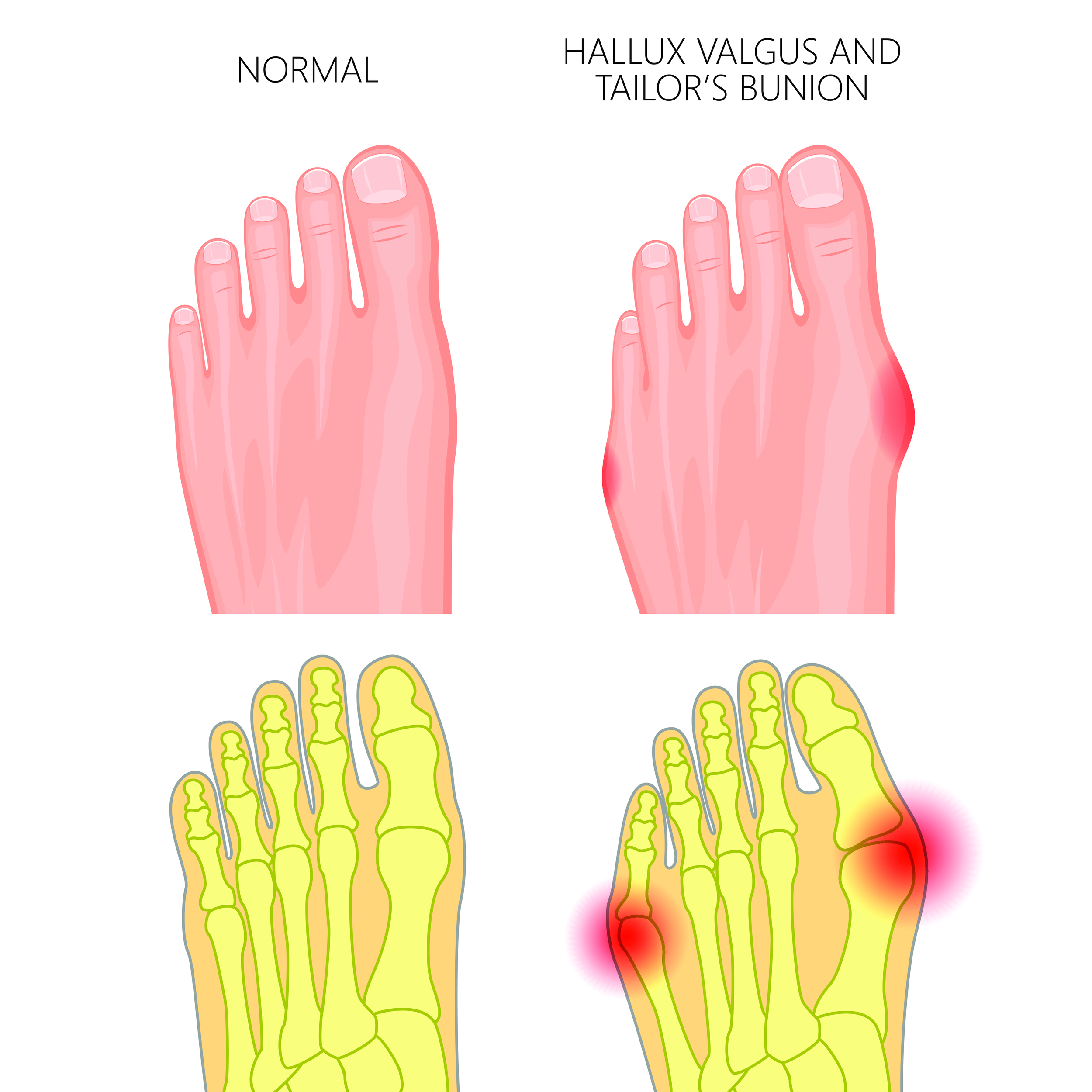
Bunions are due primarily to genetic factors, but can become painful over time due to trauma, ill-fitting shoes and poor foot structure.
What happens, is that the bone connected to the big toe starts to drift outward pushing the big toe sideways into the other toes which can also lead to painful hammertoes, corns and calluses.
Bunions if left untreated, not only can become painful, but can become progressively worse. Although wider shoes, padding and custom orthotics may slow down this progression, surgery is the only way to correct the bunion deformity.
Bunion surgery is usually performed on an out-patient basis which means patients get to go home on the same day of the surgery. Many of our patients start walking on the operative foot within a few days and can return to work within a short period of time. It is our objective to get you back on your feet as soon possible.
North Fork Podiatry & Three Village Podiatry can provide diagnosis and treatment options. Contact us today for a complete evaluation.
HAMMERTOE
Hammertoe is a deformity of the second, third, fourth or fifth toes. In this condition, the toe is bent at the middle joint, resembling a hammer. Left untreated, hammertoes can become inflexible and require surgery.
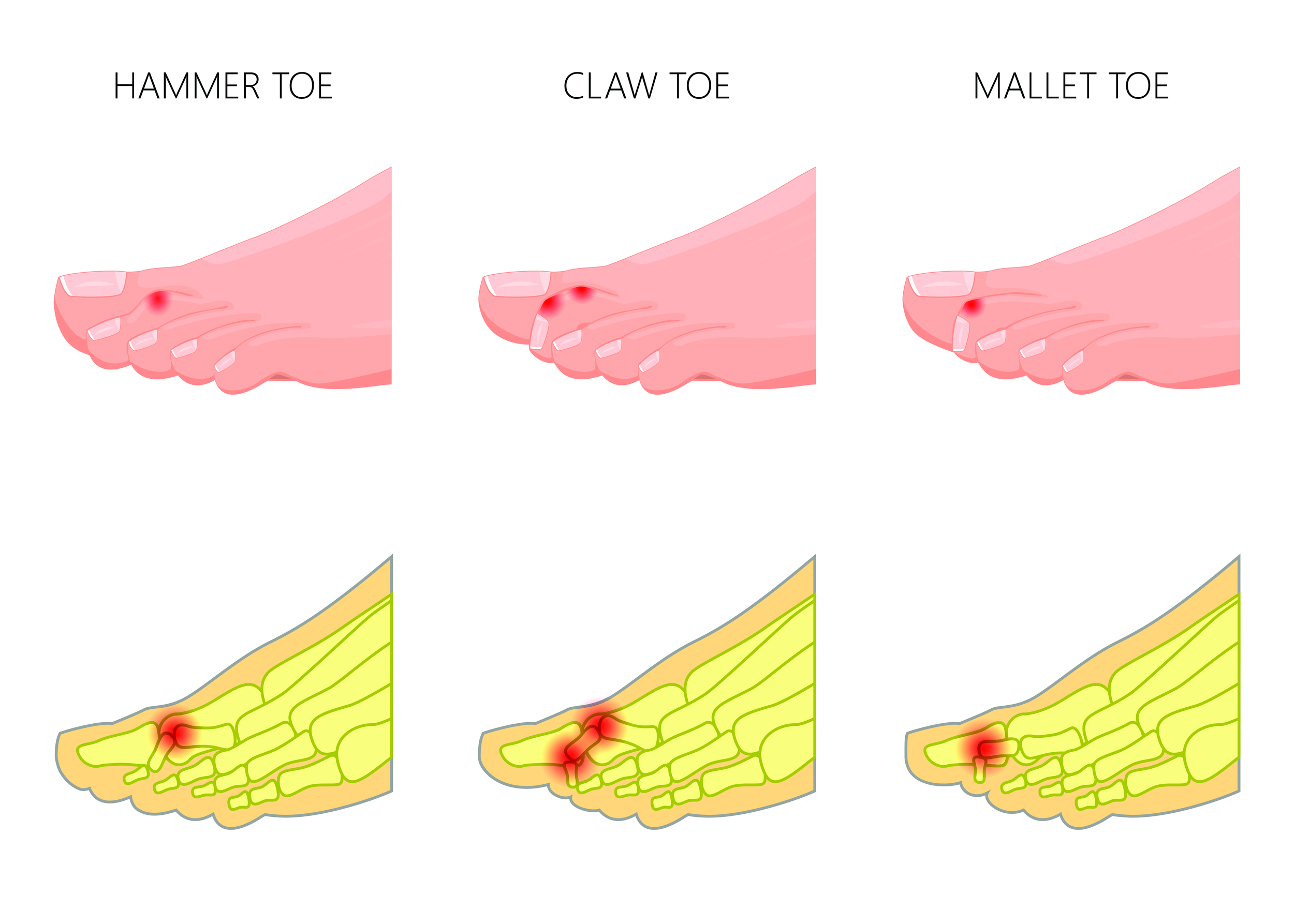
People with hammertoe may have corns or calluses on the top of the middle joint of the toe or on the tip of the toe. They may also feel pain in their toes or feet and have difficulty finding comfortable shoes. Causes of hammertoe include improperly fitting shoes and muscle imbalance.
Treatment for the condition typically involves shoes with soft, roomy toe boxes and toe exercises to stretch and strengthen the muscles. Straps, cushions or non-medicated corn pads may also relieve symptoms. Schedule an appointment with North Fork Podiatry & Three Village Podiatry, our Hammertoe Doctor can help you find relief from hammertoes.
FAQs - Bunions & Hammertoes
-
Bunions and hammertoes develop from changes in foot structure and joint alignment. Genetics, inherited foot mechanics, muscle imbalances, and certain medical conditions may contribute. Tight or poorly fitted shoes can aggravate symptoms. North Fork Podiatry evaluates these deformities and recommends treatment based on discomfort and functional limitations.
-
Some bunions gradually become more pronounced, while others remain relatively stable for years. Progression varies depending on foot structure, biomechanics, footwear, and individual factors. Early evaluation can help identify appropriate ways to manage discomfort, reduce pressure, and monitor changes in joint alignment.
-
Yes. Non-surgical treatments may include wider footwear, padding, custom orthotics, activity modifications, and other measures to reduce pressure and discomfort. These approaches generally do not permanently correct an established structural deformity. Dr. Buffone helps patients determine whether conservative management can adequately relieve their symptoms.
-
Custom orthotics may reduce bunion-related discomfort by improving foot support and redistributing pressure during walking. Although orthotics cannot reverse the underlying joint deformity, they may help manage symptoms associated with abnormal foot mechanics. North Fork Podiatry evaluates whether orthotics would benefit patients experiencing painful bunions.
-
Surgery may be considered when bunion or hammertoe pain persists despite appropriate non-surgical treatment, limits walking, or interferes significantly with daily activities. The decision depends on symptom severity, deformity, overall health, and personal goals. Dr. Buffone can discuss treatment options and appropriate surgical referrals or procedures.
-
Recovery depends on the procedure performed and the severity of the deformity. Some patients resume limited activities within several weeks, while bone healing and return to regular footwear may take months. Swelling can persist longer. Your surgeon will provide specific instructions regarding weight-bearing, footwear, and activity restrictions.